 Loading…
Loading…
Loading…




In today’s complex global economy, industries across sectors face the critical challenge of optimising resource utilisation and minimising operational waste throughout their supply chains. Despite significant production capabilities, inefficiencies can lead to substantial product loss, wasted resources, and reduced profitability.
Annually, businesses face significant losses stemming from suboptimal supply chain practices, which cost trillions globally. So, what are the root causes of these inefficiencies, and how can modern enterprises leverage advanced solutions to overcome them?
What Causes Product Loss and Material Waste?
Product loss is defined as a decrease in the quantity or quality of commodities, whether consumable, perishable, or sensitive, at different phases of the supply chain, from manufacturing to distribution to sale.
For example:
• Over 50% of fresh food is wasted worldwide due to rotting, inappropriate storage, or poor handling.
• In certain markets, temperature fluctuations render more than 20% of medications useless.
• Mismanaged storage and inadequate stock rotation cause high-tech devices to deteriorate and become obsolete.
Retail decline in developed markets is caused by:
• Improper handling or damage during storage and transportation
• Product rejection due to expired or defective packaging.
• Overstocking or poor inventory turnover.Food rejected
In poor economies, post-production loss comes from:
• Insufficient warehouse handling equipment.
• Limited use of technology for tracking and control.
• Infrastructure and supply chain management systems have gaps
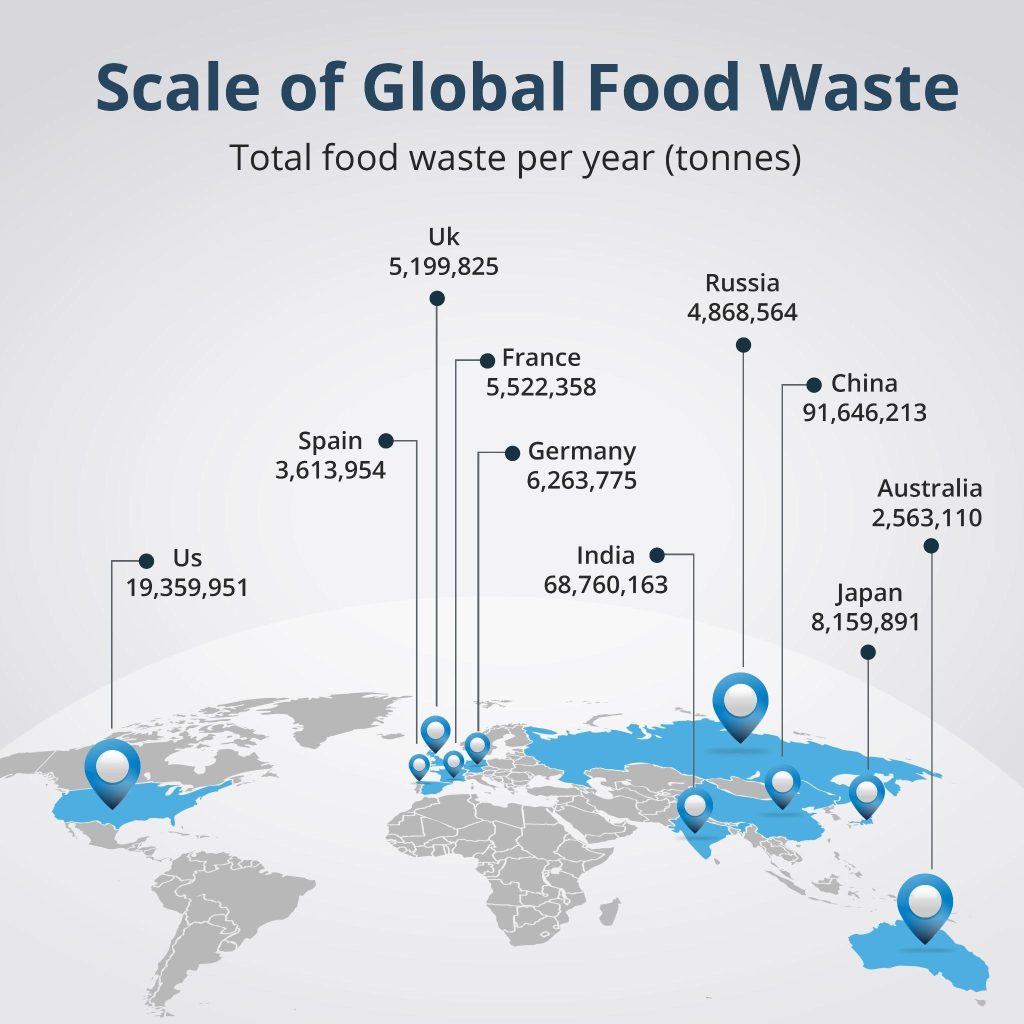
Source: UNEP Food Waste Index Report 2021
Reimagining Efficiency: The Future of Loss Prevention
The United Nations 2030 Agenda for Sustainable Development promotes:
• Efficient utilisation of resources
• Sustainable Production and Consumption Practices
• Reducing resource waste and product loss across several sectors
This necessitates a widespread move towards digital, automated, and integrated supply chain processes. Key tactics include:
• Improve harvesting, storage, processing, and distribution processes.
• Invest in cold supply chain solutions to avoid temperature-related spoilage.
• Using ASRS and conveyor systems for sensitive material handling.
• Diverting old or underused items into secondary markets or safe recycling.
• Utilising data to enhance demand forecasts and inventory management
These stages apply not only to food, but also to the pharmaceutical, biotech, electronics, and chemical sectors, all of which require consistent quality, safety, and traceability.
The Rise of Cold Chain Logistics
A cold chain, or temperature-controlled supply chain, is critical for maintaining product integrity, particularly for perishable or temperature-sensitive items. This includes food, vaccinations, specialised chemicals, and microelectronics. The worldwide cold chain market is expected to increase from $182.5 billion in 2022 to $343.75 billion by 2027 (13.5 percent CAGR), driven by:
• Increased demand for temperature-sensitive items.
• Changes in consumer behaviour and global health awareness
• Rising demands for safety and compliance in storage and travel.
The ASEAN Opportunity
Tropical locations, such as Southeast Asia, have a higher risk of spoiling due to high temperatures and humidity. This makes cold chain logistics essential for companies that want to assure product safety, compliance, and quality.
The ASEAN cold chain market is predicted to increase by more than 12% between 2022 and 2027, driven by supply chain modernisation, digital transformation, and pandemic-driven regulatory changes.
The Effect of Product Loss and Operational Inefficiency
Product loss isn’t merely a financial hardship; it impacts numerous layers of global business.
• Resource Waste: When commodities are lost, so are the water, land, energy, and labour used to produce them.
• Environmental Damage: Damaged or abandoned items frequently wind up in landfills, causing carbon emissions and increasing ecological footprints.
• Business Risk: Shrinkage caused by mismanagement, obsolescence, or spoiling diminishes profitability and strains compliance.
Whether it’s an outdated prescription, a faulty electrical component, or ruined food, the outcome is the same: missed opportunities and squandered resources.
Challenges for Modern Supply Chains
Enterprises encounter a variety of issues in controlling product loss and inefficiency:
• Fragmented infrastructure for storage, inventory, and transportation
• Overproduction owing to inadequate demand forecasts results in inventory dumping.
• Inefficient distribution methods fail to reach remote or time-sensitive markets.
To close these gaps, we need scalable, intelligent supply chain systems that prioritize visibility, control, and response.
How Cold Chain Automation Reduces Product Loss
Cold chain automation has been shown to effectively avoid spoilage and material deterioration. Organisations may create responsive and secure supply chains by leveraging technology such as ASRS, shuttles, and conveyor systems.
Benefits include:
• Reduced spoilage and damage due to inappropriate handling.
• Increased product shelf life with regulated storage
• Increased consistency and compliance with regulated goods
• Increased export possibilities and geographical reach.
• Real-time monitoring ensures seamless cross-border movement
How Godrej Körber Assists The Industry In Minimising Product Loss
Godrej Körber Supply Chain Solutions enables enterprises to decrease waste and increase productivity through warehouse automation, cold chain logistics, and precise inventory control. This is how we make a difference.
The Way Forward
Today’s supply networks must become lean, smart, and resilient. Industries that combine intelligent automation, data-driven insights, and cold chain advances may drastically minimise product loss and establish more sustainable, efficient operations.
At Godrej Körber, we are delighted to assist businesses across industries in optimising their logistics operations, reducing material waste, and ensuring product quality, from the manufacturing floor to the ultimate destination.
Contact us for a consultation on your supply chain needs.
Recent Blogs


